
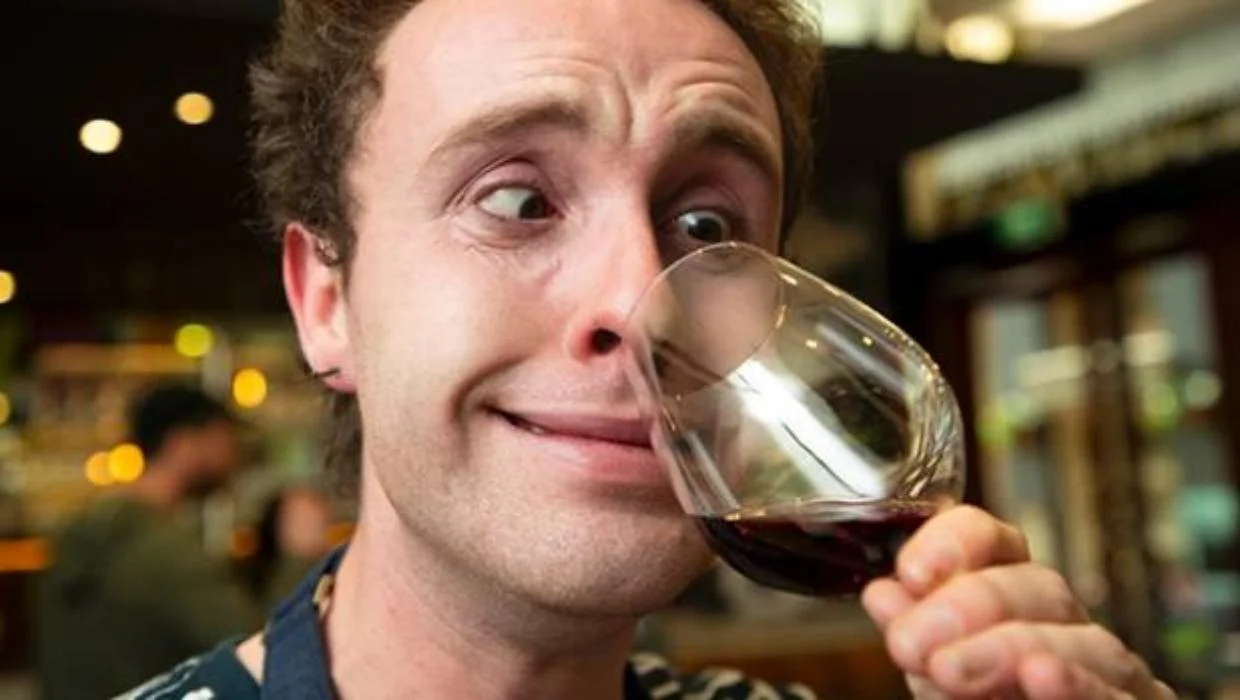
The Great Wine Hoax: Why Blind Tasting Proves You Should Never Trust the “Experts”
Welcome to Truth in Half a Glass – where we refuse to swallow the marketing with the wine.
For decades, we’ve been told a comforting fairy tale:
Pay more, get better wine. Trust the sommeliers, the 96-point scores, the critics who swirl, sniff, and spit out poetry about “wet forest floor” and “velvet tannins.”
They’re the experts. They know.
Then someone hands them the same wine in a black glass with the label hidden… and the fairy tale collapses faster than a $300 bottle of oxidized cult Cabernet.
Here’s what actually happens when the price tags come off.
The Evidence That Broke the Myth
- 6,000 blind tastings, 523 wines ($1.65 to $150)
Study: Goldstein et al., Journal of Wine Economics (2008)
Result: People enjoyed expensive wines slightly less than cheap ones. The more training you had, the weaker the price-quality link became. Yes – actual experts performed worse at matching price to pleasure. - 578 people at the Edinburgh Science Festival
Task: Guess if a wine cost under £5 or over £10.
Result: 50% accuracy. Exactly what you’d get flipping a coin. Self-described “wine lovers” did no better than total novices. - 54 oenology students at the University of Bordeaux (Brochet, 2001)
Experiment 1: They were given a white wine… dyed red with odorless food coloring.
Result: 100% described it with red-wine terminology (“blackcurrant,” “tannins,” “cherries”). Zero noticed it was white.
Experiment 2: Same cheap wine in two bottles – one labeled £7, one labeled £60.
Result: The “expensive” version scored dramatically higher. Same liquid, different price tag, totally different tasting notes. - Professional judges at the California State Fair (Hodgson, 2008-2012)
The same wine poured three times, blindly, for the same judges.
Result: Scores varied by an average of ±4 points – enough to swing a wine from bronze medal to rejection. Medal-worthy one day, trash the next. From the same bottle.
The Verdict Is In: Taste Is Mostly in Your Head (and Your Wallet)
When the visual cues, the price, the story, and the reputation are stripped away, the emperor has no clothes.
The people who make a living telling you which wines are “great” cannot reliably tell the difference themselves once the game is fair.
This isn’t a fringe opinion anymore. It’s the repeated, peer-reviewed conclusion of the best experiments we have.
So What Should You Actually Trust?
Your own mouth.
Buy what you like, not what you’re told you’re supposed to like. A $12 bottle that makes you happy is infinitely better than a $120 bottle that makes Robert Parker happy.
The next time someone lectures you about “terroir” and “complexity” while pushing a triple-digit bottle, smile, pour yourself something delicious and cheap, and remember:
Blind tasting didn’t just humble the experts.
It set the rest of us free.
Cheers to drinking what tastes good – not what costs good.
Cheers with whatever pleases you!
The Coast Art Wines Team
P.S. Share this with the friend who still believes “you get what you pay for” in wine. They need the liberation.